The Water Pump
الطلمبة · 2005
A short picture-book tale from Dar al-Maaref’s Once Upon a Time series. Amm Abdel-Azim, a farmer, believes the whole village shares in the water of his hand pump. In a few illustrated pages Abdeltawab Youssef shows young readers what sharing and a clean heart mean, then leaves them with a final question: which heart did he mean? The English translation is by his daughter, Dr Loubna Youssef.
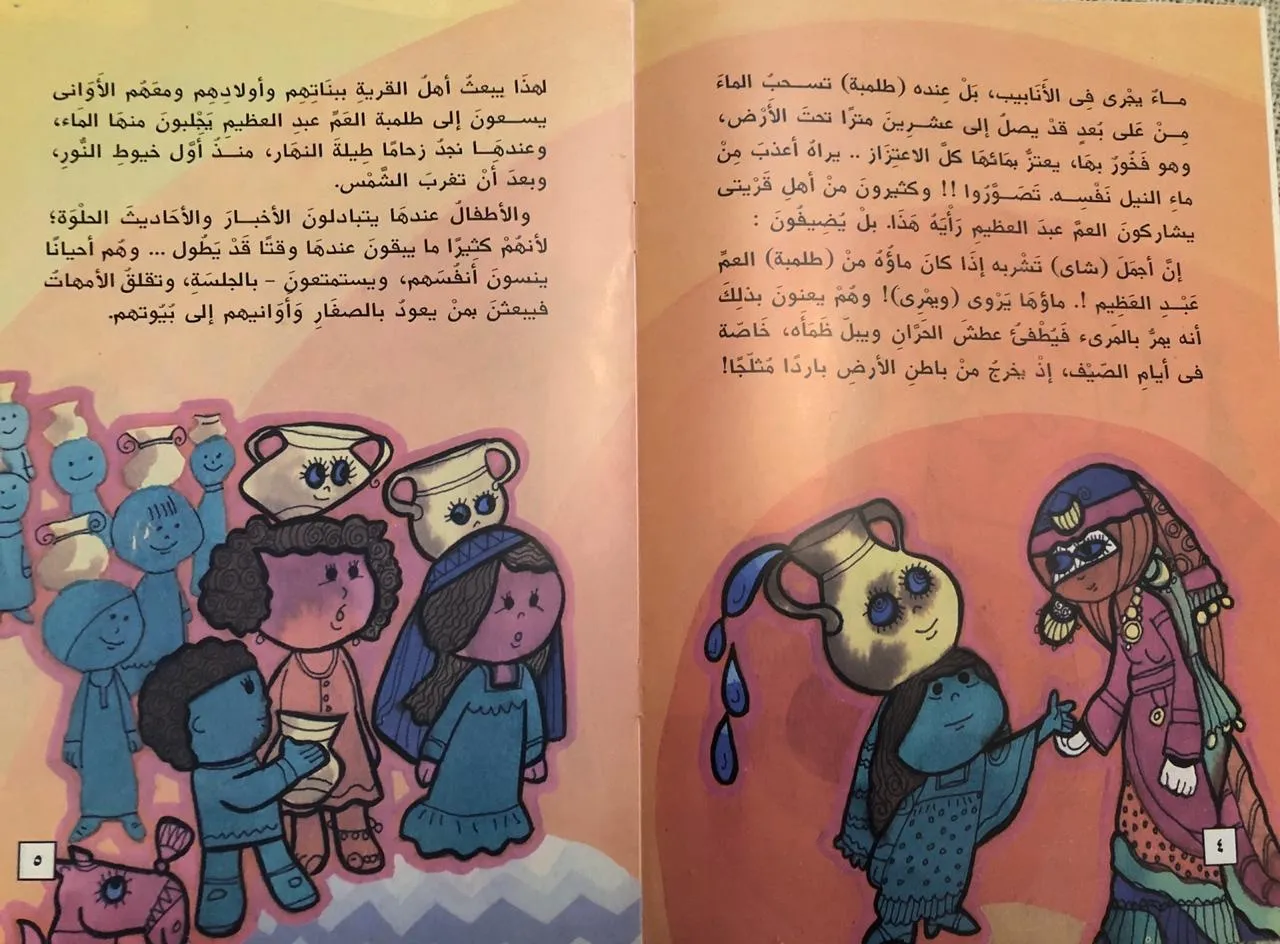
Amm Abdel-Azim is a great farmer, a friend of the spade, the tractor, and the field. The sun rose and set as he tended his fields and crops, cared for them and loved them as he did his children. At home, he did not have to worry about shortage of water: his water supply did not come through pipes and taps, but he had a water pump. This water pump pulls water from up to twenty meters below ground. Amm Abdel-Azim was proud of it and cherished the water pouring out of it dearly. He felt it was sweeter than the waters of the Nile itself. Many villagers agreed with Amm Abdel-Azim and added,
“The best tea is made with water from Amm Abdel-Azim’s water pump. Its water quenches thirst, especially in the summer because it comes from the ice-cold heart of the earth.”
The villagers often, therefore, sent their sons and daughters with large pots to get water from Amm Abdel-Azim’s water pump. There was always a big crowd from dawn to sunset. Because they spent a long time there, they would chat and exchange news. They would often lose their sense of time enjoying the company of others, forgetting that their mothers worried about them at home.
Amm Abdel-Azim was very happy with this gift of water gushing from the earth. He talked about his water pump often, believing it is right to “talk about God’s gifts”. He prevented no one from taking water. When little children were unable to pull the hand of the water pump up and down because it was too high or too hard for them, Amm Abdel-Azim would hop on his one leg, lean on his stick, and help them. He would sometimes start talking to them and the little children would repeat what he told them all over the village. He would say,
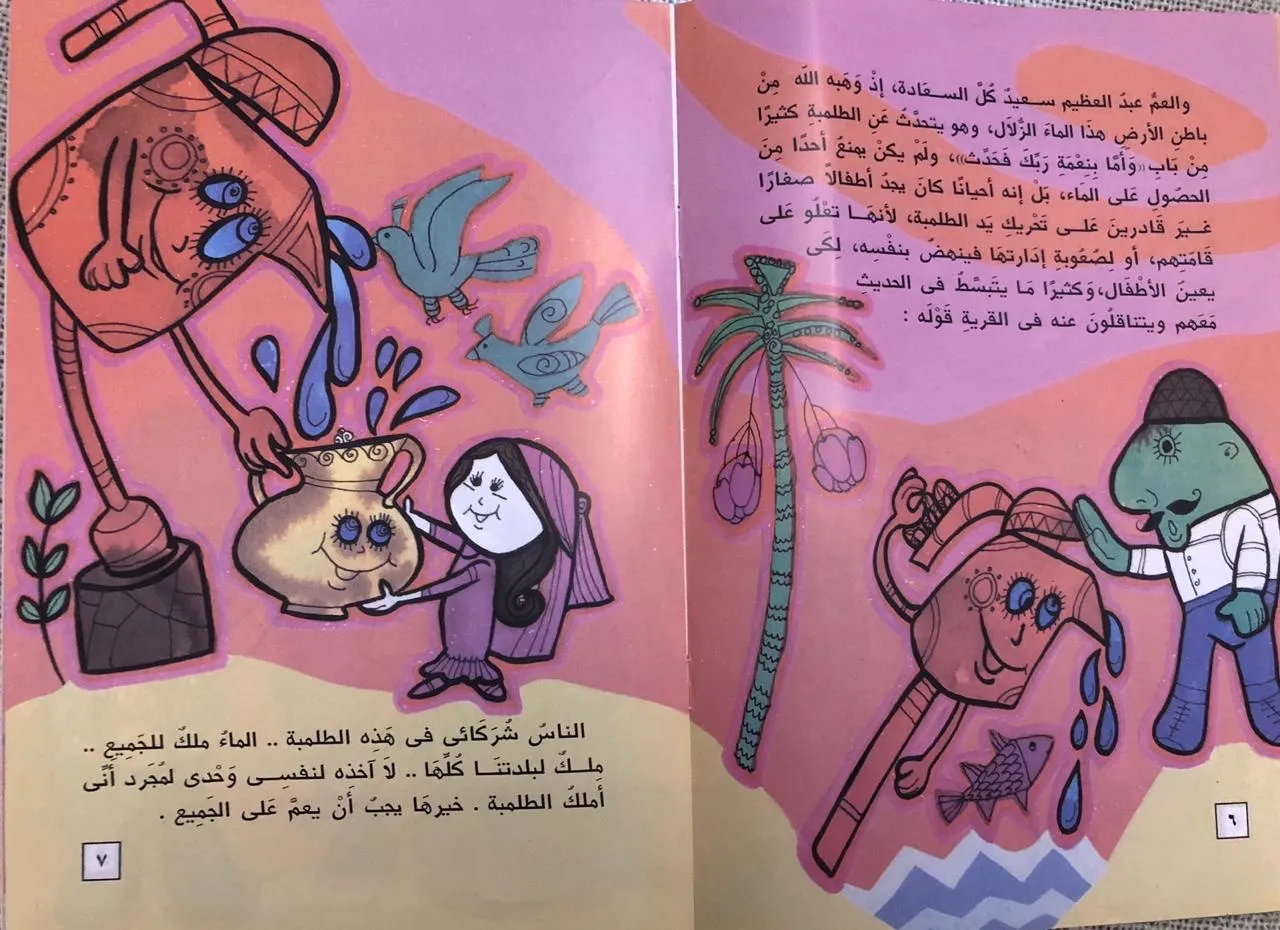
“People are my partners in the ownership of this water pump. It is the property of the whole village. I will not monopolize it just because it is mine. This water pump should benefit everyone.”
The water pump would often go out of order because of overuse, but he would repair it immediately. He was always happy to do this since it upset him to disappoint a boy or girl who came for water and could not get it. Before travelling, he would tell his wife and children,
“Never stop people from getting water. Take care.”
At one time Amm Abdel-Azim left for a whole week. On the morning of his arrival, he tried to push the hand of the water pump up and down, but the sweet water did not flow. The water was muddy and unclear. He shouted as he asked his wife,
“What happened to the water pump?”
“Nothing. We did not use it since you left.”
“Why? You have deprived people of its water and now you yourself are deprived of it.”
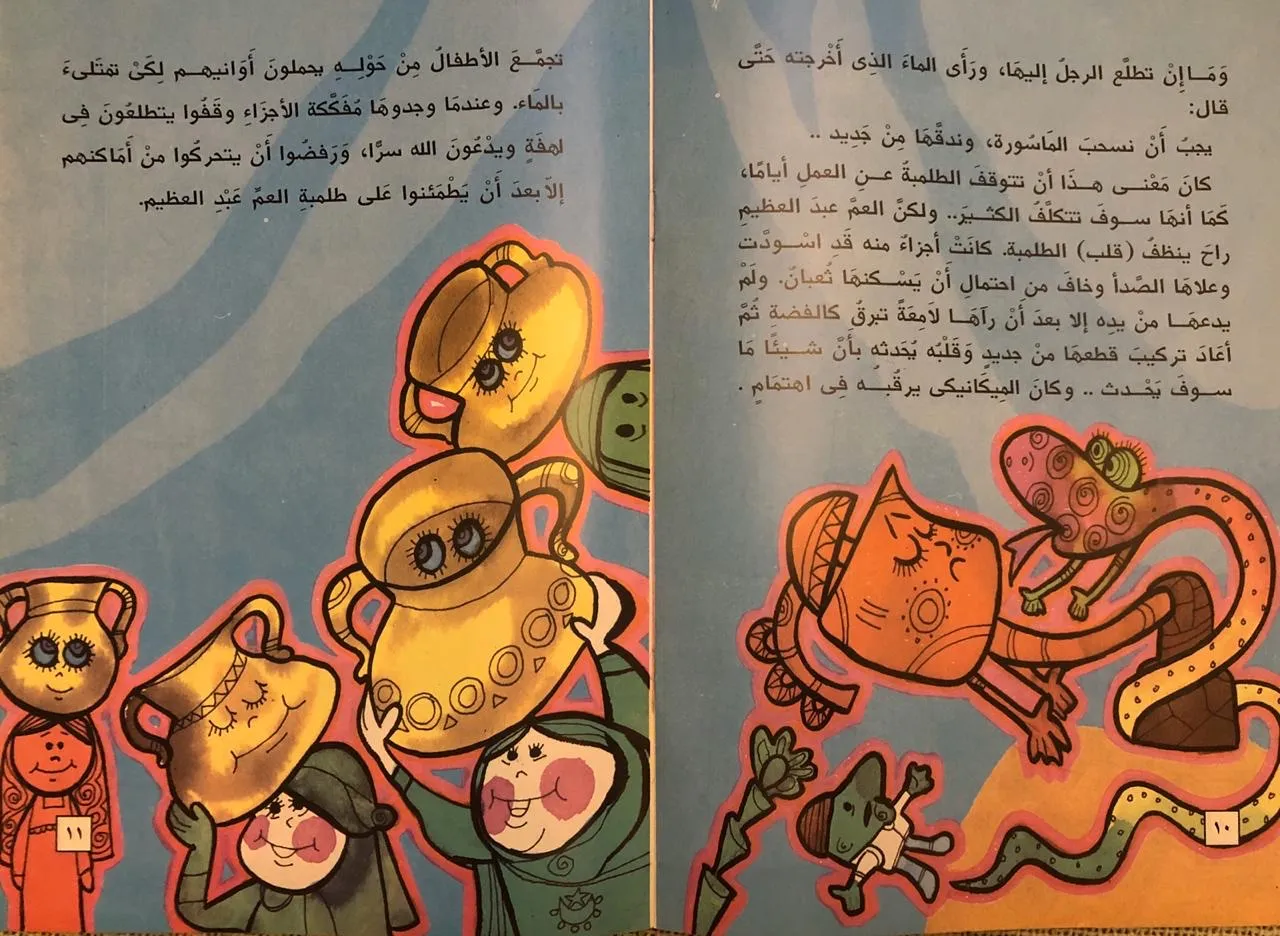
Amm Abdel-Azim started repairing the water pump. He took it to pieces knowing all the parts well. Unfortunately, he needed help. Impatiently he sent for a mechanic who took one look at it and at the water pouring out and said,
“We must pull the pump out and dig it in again.”
This implied that the water pump will not work for days and that repairing it will cost a lot of money. Amm Abdel-Azim decided to try again and diligently cleaned the inside of the water pump, parts of which had turned black and rusty. When he was done, all the parts glittered like gold. He re-installed all the parts and in his heart he knew what was about to happen. The mechanic watched him intently, and many children with empty pots were gathered and watching too. When they had seen the pump in pieces, they gazed anxiously and secretly prayed to God. They refused to leave until they made sure that Amm Abdel-Azim’s water pump was running again.
All the parts were in place and the water pump was re-installed. A little boy looked appealingly at Amm Abdel-Azim, desiring something that Amm Abdel-Azim understood immediately. The little boy wanted the honor of starting the water pump after it was repaired. Amm Abdel-Azim granted the boy his request.
The little boy held the hand of the water pump, gazed apprehensively then shouted,
“In the Name of God, the Merciful, the Compassionate.”
Sweet, pure and clean water poured out of the water pump.
“God is Great.”
Amm Abdel-Azim walked away, saying,
“The heart must be clean.”
Was he referring to the heart of the water pump? Or to the heart of his wife and children?
Until today, the water pump in Amm Abdel-Azim’s courtyard is functioning for the pure of heart, gushing sweet water to quench the thirst, and to make good tea and delicious food.
العمُّ عبدُ العظيم، فلاحٌ عظيمٌ .. صديقٌ للفأس، والجرّار، والحقل، تُشرقُ الشمسُ وتغربُ، وهو بين زرعه، يحنو عليه ويحبُّه كابنه ..
وهو فى البيت لا يحسُّ بمشكلة انقطاع المياه عن الصنبور، إذ ليس عنده ماءٌ يجرى فى الأنابيب، بل عنده (طلمبة) تسحبُ الماءَ من على بُعد قد يصلُ إلى عشرين مترًا تحت الأرض، وهو فخورٌ بها، يعتزُّ بمائها كلَّ الاعتزاز .. يراه أعذبَ من ماء النيل نفسه. تصوَّروا !! وكثيرون من أهل قريتى يشاركون العمَّ عبدَ العظيم رأيَه هذا. بل يضيفون :
إنَّ أجملَ (شاى) تشربه إذا كان ماؤه من (طلمبة) العمِّ عبدِ العظيم !. ماؤها يَروى (ويبرى)! وهم يعنون بذلك أنه يمرُّ بالمرء فيُطفئ عطشَ الحرّان ويبلُّ ظمأه، خاصةً فى أيام الصيف، إذ يخرجُ من باطن الأرض باردًا مثلَّجًا!
لهذا يبعثُ أهلُ القرية ببناتهم وأولادهم ومعهم الأوانى يسعون إلى طلمبة العمِّ عبدِ العظيم يجلبون منها الماء، وعندها نجدُ زحامًا طيلةَ النهار، منذ أوَّل خيوط النور، وبعدَ أن تغربَ الشمس.
والأطفالُ عندها يتبادلون الأخبارَ والأحاديثَ الحلوة؛ لأنهم كثيرًا ما يبقون عندها وقتًا قد يطول ... وهم أحيانًا ينسون أنفسهم، ويستمتعون بالجلسة، وتقلقُ الأمهاتُ فيبعثنَ بمن يعودُ بالصغار وأوانيهم إلى بيوتهم.
والعمُّ عبدُ العظيم سعيدٌ كلَّ السعادة، إذ وهبه اللهُ من باطن الأرض هذا الماءَ الزلال، وهو يتحدثُ عن الطلمبة كثيرًا من باب «وأمّا بنعمة ربّك فحدّث»، ولم يكن يمنعُ أحدًا من الحصول على الماء، بل إنه أحيانًا كان يجدُ أطفالًا صغارًا غيرَ قادرين على تحريك يد الطلمبة، لأنها تعلو على قامتهم، أو لصعوبة إدارتها فينهضُ بنفسه، لكى يعينَ الأطفال، وكثيرًا ما يتبسَّطُ فى الحديث معهم ويتناقلون عنه فى القرية قولَه :
الناسُ شركائى فى هذه الطلمبة .. الماءُ ملكٌ للجميع .. ملكٌ لبلدتنا كلِّها .. لا آخذه لنفسى وحدى لمجرد أنى أملكُ الطلمبة. خيرُها يجبُ أن يعمَّ على الجميع.
وكثيرًا ما تعطبُ الطلمبة، لأنَّ الأيادى الكثيرة تتوالى عليها، لكنه لا يبخلُ عليها بالإصلاح، وليس هناك ما يؤلمه أكثرَ من أن يردَّ عنها طفلٌ أو طفلةٌ جاءا ليحملا منها الماء .. وكان - دائمًا - إذا سافرَ بعيدًا عن القرية يوصى زوجتَه وأولادَه ويقولُ لهم :
لا تمنعوا أحدًا من الحصول على الماء .. احذروا.
وسافرَ العمُّ عبدُ العظيم مرةً بعيدًا عن القرية أسبوعًا كاملًا .. وعادَ إليها. ومعَ الصباح .. يومَ رجوعه امتدَّت يدُه تُديرُ الطلمبة.
وإذا بها لا تخرجُ الماءَ العذبَ الذى تعوَّده منها، أذهله أن تخرجَ معه طينًا ورملًا .. وهتفَ لزوجته يسألها:
- ماذا حدثَ للطلمبة؟
ردَّت عليه: لا شىء .. إننا .. حق.. لم ندرها منذ سافرت!
صرخ: ماذا ؟! حرمتم الناسَ من مائها، وها أنتم أولًا تُحرمون منه!! انكبَّ العمُّ عبدُ العظيم على الطلمبة يفكُّ أجزاءَها .. إنه يعرفها قطعةً قطعةً .. وأرسلَ يستدعى إليه الميكانيكى فهو غيرُ قادرٍ على أن ينتظره.
وما إن تطلَّع الرجلُ إليها، ورأى الماءَ الذى أخرجته حتى قال:
يجبُ أن نسحبَ الماسورة، وندقَّها من جديد ..
كانَ معنى هذا أن تتوقفَ الطلمبةُ عن العمل أيامًا، كما أنها سوف تتكلفُ الكثير.. ولكنَّ العمَّ عبدَ العظيم راحَ ينظفُ (قلب) الطلمبة. كانت أجزاءٌ منه قد اسودَّت وعلاها الصدأ وخافَ من احتمال أن يسكنها ثعبان. ولم يدعها من يده إلا بعدَ أن رآها لامعةً تبرقُ كالفضة ثم أعادَ تركيبَ قطعها من جديد وقلبُه يحدثه بأنَّ شيئًا ما سوف يحدث .. وكانَ الميكانيكى يرقبُه فى اهتمام.
تجمَّعَ الأطفالُ من حوله يحملون أوانيهم لكى تمتلئَ بالماء. وعندما وجدوها مفكَّكةَ الأجزاء وقفوا يتطلعون فى لهفة ويدعون اللهَ سرًّا، ورفضوا أن يتحركوا من أماكنهم إلا بعدَ أن يطمئنوا على طلمبة العمِّ عبدِ العظيم.
أُعيدَ كلُّ شىء إلى مكانه، وتمَّ تركيبُ يد الطلمبة، ونظرت طفلةٌ صغيرةٌ إلى العمِّ عبدِ العظيم بعينين متوسلتين، تطلبُ شيئًا أدركه الرجلُ على الفور واستجابَ له، الصغيرةُ تريدُ أن يكونَ لها شرفُ إدارة الطلمبة بعدَ أن تمَّ إصلاحها.
وامتدَّت يدُ الصغيرة، وأطلَّت من عينيها نظرةٌ قلقةٌ، ثم هتفت ..
(بسم الله الرحمن الرحيم)
وتدفقَ الماءُ من الطلمبة .. عذبًا .. طاهرًا .. نظيفًا ..
وهتفَ الأطفالُ من حوله بفرح.. الله أكبر..
ومضى العمُّ عبدُ العظيم، وهو يقولُ:
القلبُ يجبُ أن يكونَ أبيض.
هل كانَ يقصدُ قلبَ الطلمبة ؟ أم قلبَ زوجته وأولاده ؟! لا أدرى ويضيفُ: قلبُ الطلمبة يمكنُ غسله بالبنزين، كيفَ نغسلُ قلبَ البشر ؟!
والطلمبة .. إلى اليوم .. قائمةٌ فى صحن دار العمِّ عبدِ العظيم .. طاهرةُ القلب عذبةُ الماء وافرةُ العطاء .. تروى العطشى والظمآنين، ويحلو صنعُ الشاى وطهو الطعام من مائها !